

Which Magnesium Should You Take? A Simple Guide to Magnesium Types
Magnesium, But Make It Make Sense
(Because the Cheap One Probably Betrayed You)
If you’ve ever taken magnesium and thought:
“Cool, this did absolutely nothing,”
or worse — “why am I bloated, crampy, or sprinting to the bathroom?”
…it’s probably not magnesium’s fault.
It’s the type.
Magnesium isn’t one thing. It’s a whole family. And each version does something different — which is why one person swears it saved their sleep and another swears it ruined their day.
Let’s break it down in a real-life, no-woo, Lauren Loves a Deal way — with brand-specific picks you can actually shop.
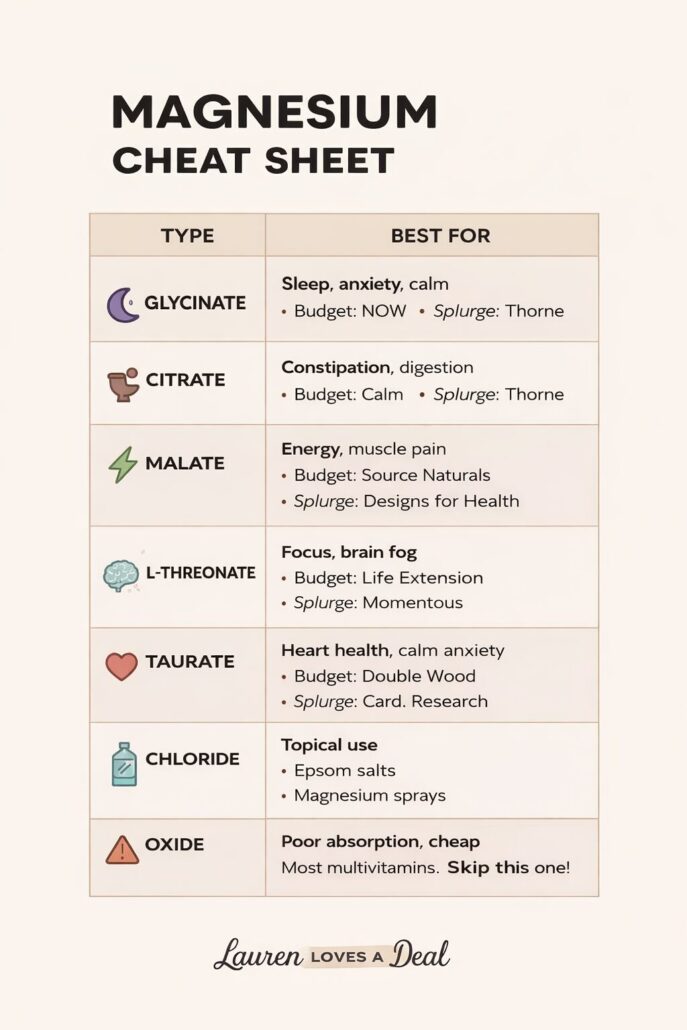
The Magnesium Types That Actually Matter
💤 Magnesium Glycinate
Best for: Sleep, anxiety, nervous system calm
This is the most universally tolerated form — gentle and actually absorbed.
Highly Recommended (Budget):
- NOW® Magnesium Glycinate – gentle, clean, good daily dose
- Nature Made Magnesium Glycinate – pharmacy-friendly and easy to find
Highly Recommended (Splurge):
- Pure Encapsulations Magnesium Glycinate – very clean, low fillers
- Thorne Magnesium Bisglycinate – premium absorbability
💡 Why these? They’re well-reviewed and formulated specifically for calm + sleep support, not just “magnesium in a tablet.”
🚽 Magnesium Citrate
Best for: Occasional constipation, sluggish digestion
This one works — sometimes aggressively — by drawing water into the bowel.
Highly Recommended (Budget):
- Natural Vitality Calm Magnesium Citrate – classic, widely loved powder
- NOW® Magnesium Citrate – solid capsule version
Highly Recommended (Splurge):
- Thorne Magnesium Citrate Powder – taste and formula are premium
- Pure Encapsulations Magnesium Citrate – clean, well-absorbed
💡 Citrate is functional — use it intentionally, not habitually.
⚡ Magnesium Malate
Best for: Fatigue, muscle aches, body soreness
Malate supports muscle energy and comfort without sedation.
Highly Recommended (Budget):
- Source Naturals Magnesium Malate – reliable and affordable
- Jigsaw Magnesium Malate – solid formula with minimal fillers
Highly Recommended (Splurge):
- Designs for Health Magnesium Malate – premium, professional-grade
- Pure Encapsulations Magnesium Malate – excellent bioavailability
💡 Great choice for daytime support without making you sleepy.
🧠 Magnesium L-Threonate
Best for: Brain fog, memory, focus
This form is designed to cross the blood-brain barrier.
Highly Recommended (Budget):
- Life Extension Neuro-Mag Magnesium L-Threonate – widely praised for cognition support
Highly Recommended (Splurge):
- Momentous Magnesium L-Threonate – high-end formulation
💡 These are pricier, but targeted if “foggy brain” is your biggest complaint.
❤️ Magnesium Taurate
Best for: Heart support + anxiety without sedation
Taurate pairs magnesium with taurine — often recommended for a calm, non-sedating effect.
Highly Recommended (Budget):
- Double Wood Magnesium Taurate – well-reviewed and affordable
Highly Recommended (Splurge):
- Cardiovascular Research Magnesium Taurate – premium sourcing
💡 Good choice if calm is your goal but you don’t want to feel sleepy.
🚫 Magnesium Oxide
Best for: Being cheap
Magnesium oxide is the kind that makes many people say “magnesium didn’t work for me.”
Lauren verdict:
❌ Usually not worth it unless used specifically as a laxative.
❌ Poorly absorbed for real magnesium needs.

Simple Starter Plan
If you don’t want five bottles:
Nighttime calm:
→ Magnesium Glycinate (Pure Encapsulations or Thorne)
Loose stool support / occasional constipation:
→ Magnesium Citrate (Natural Vitality Calm or Thorne)
Daytime energy + muscle support:
→ Magnesium Malate (Source Naturals or Designs for Health)
Foggy brain days:
→ Magnesium L-Threonate (Life Extension or Momentous)
Calm without sleepiness:
→ Magnesium Taurate (Double Wood or Cardiovascular Research)
FAQ
A: Magnesium glycinate is usually the best place to start because it’s gentle, well-absorbed, and supports sleep and calm without upsetting digestion.
A: Most of the time, it’s the wrong type (hello, magnesium oxide) or too high of a dose. Switching to a better-absorbed form and starting with a smaller amount often fixes the problem.
A: Yes. Many people use one type at night for sleep (like glycinate) and a different type for digestion or muscle support (like citrate or malate). You don’t need all of them—just the right one for your goals.
A: For most people, yes—especially forms like glycinate or malate. If you have kidney disease, take prescription meds, or you’re pregnant, check with your healthcare provider first.
A: Glycinate is typically best for sleep, stress, and muscle tension because it’s calming and gentle. Citrate is more often used for constipation and digestion support because it can have a laxative effect.
A: Most people do well starting low (like 100–200 mg of elemental magnesium) and adjusting based on how they feel. More isn’t always better—especially with citrate.
Final Lauren Loves a Deal Reality Check
If magnesium ever “didn’t work” for you, it usually means:
✔️ Wrong form
✔️ Wrong dose
✔️ Wrong overall goal
Not that magnesium itself is useless.
Your body changes, your needs change, and supplements should change with you — but no one should spend money on disappointment.
Loving what you’re seeing here?! Make sure to sign up for my newsletter to never miss the tea!